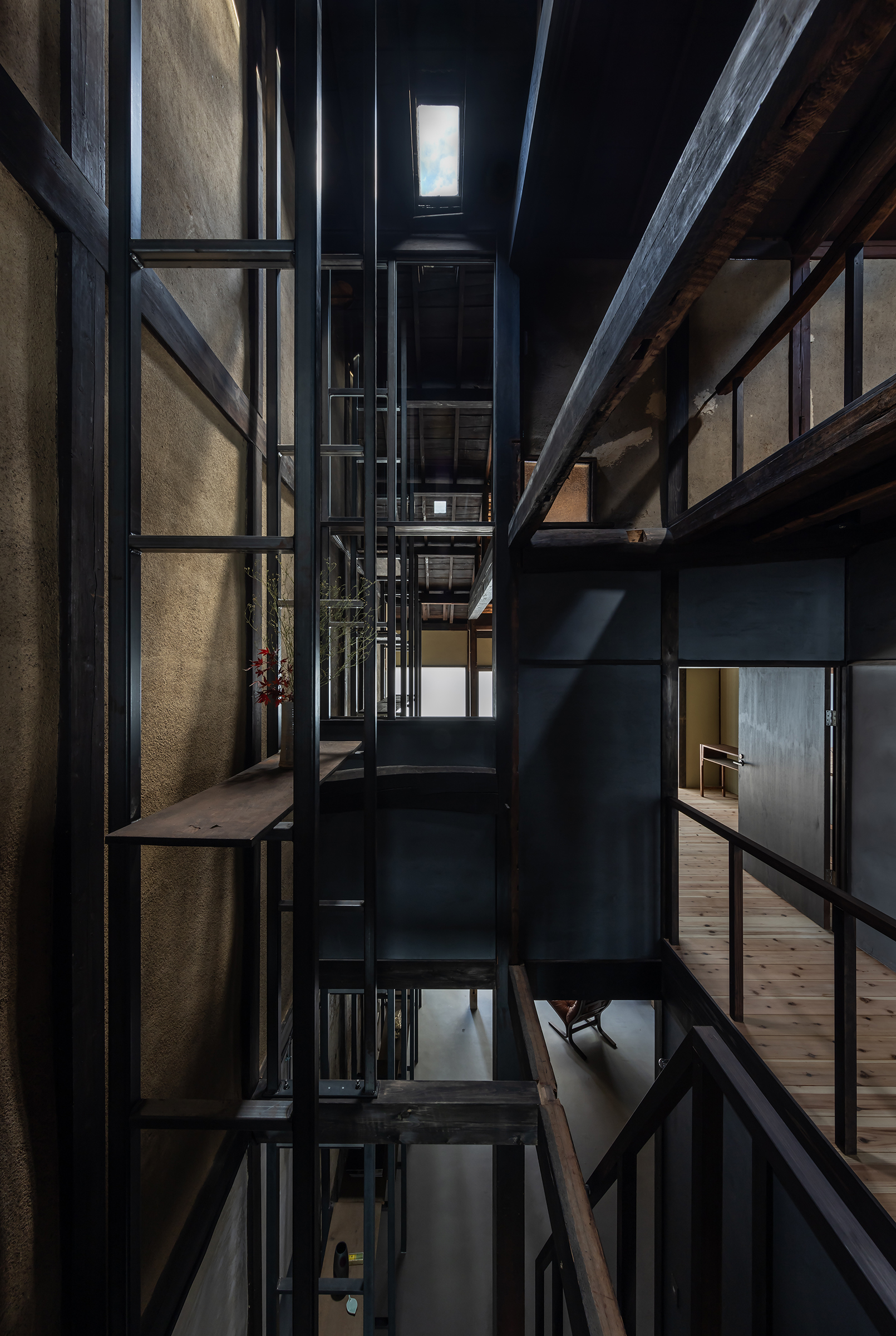
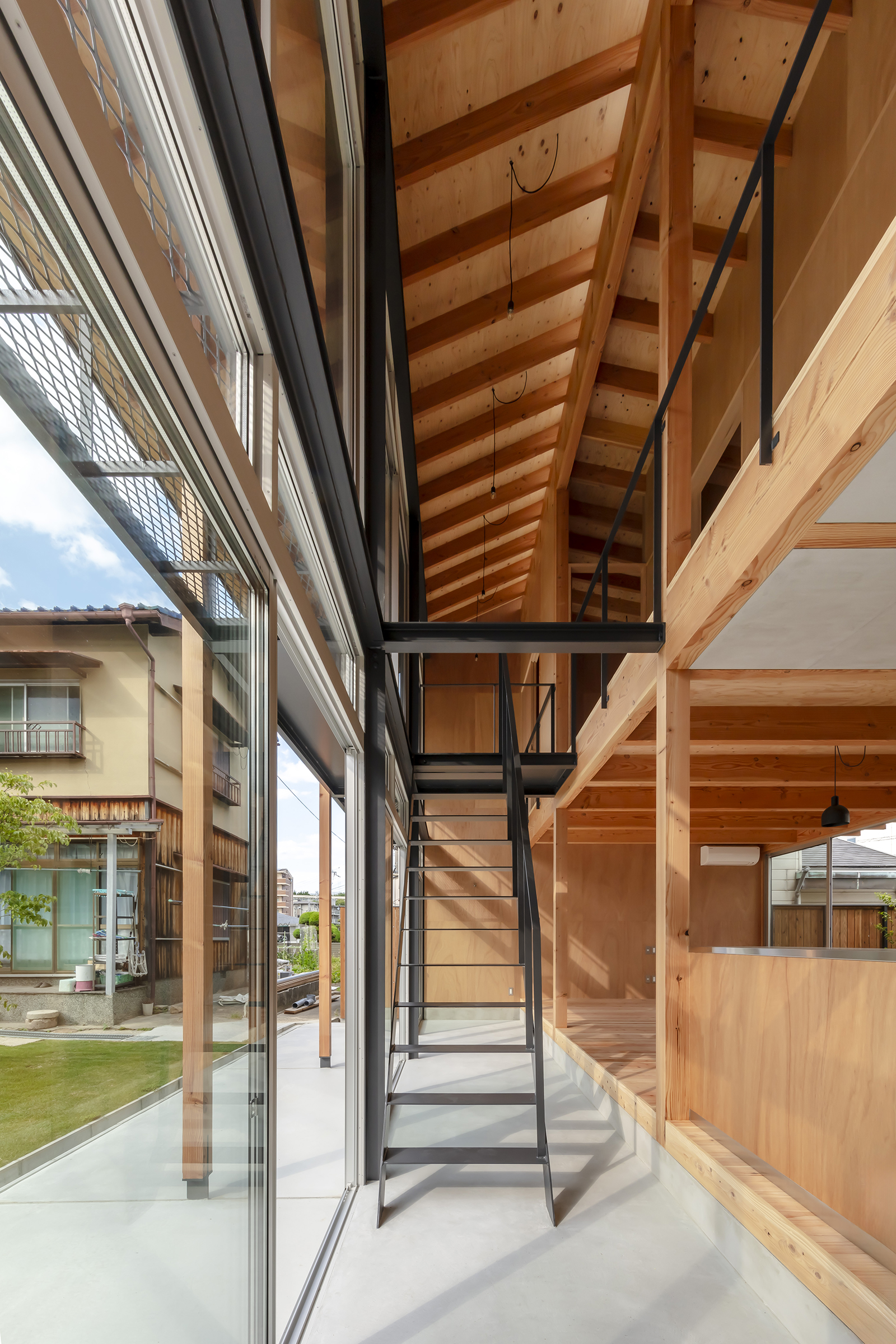
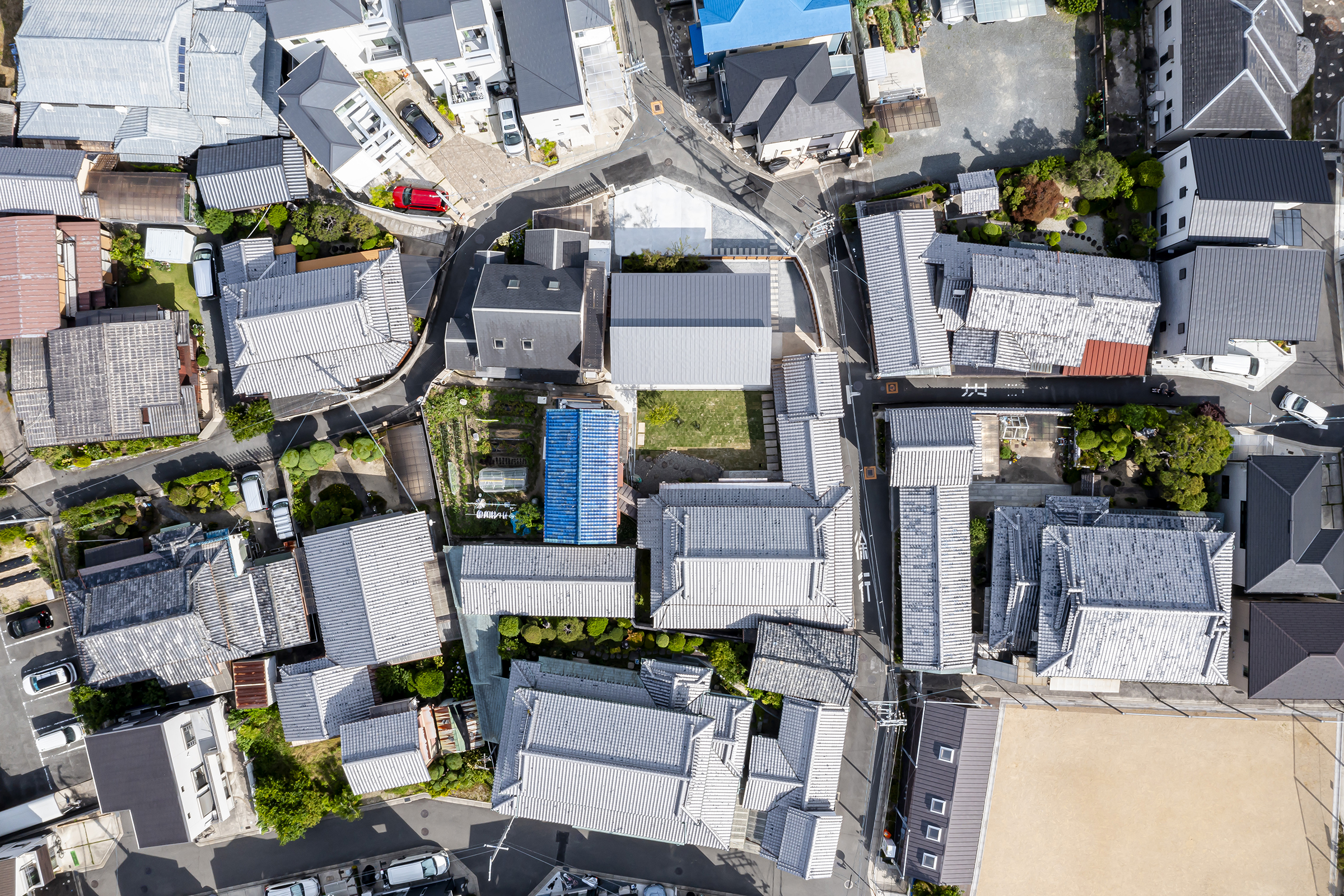
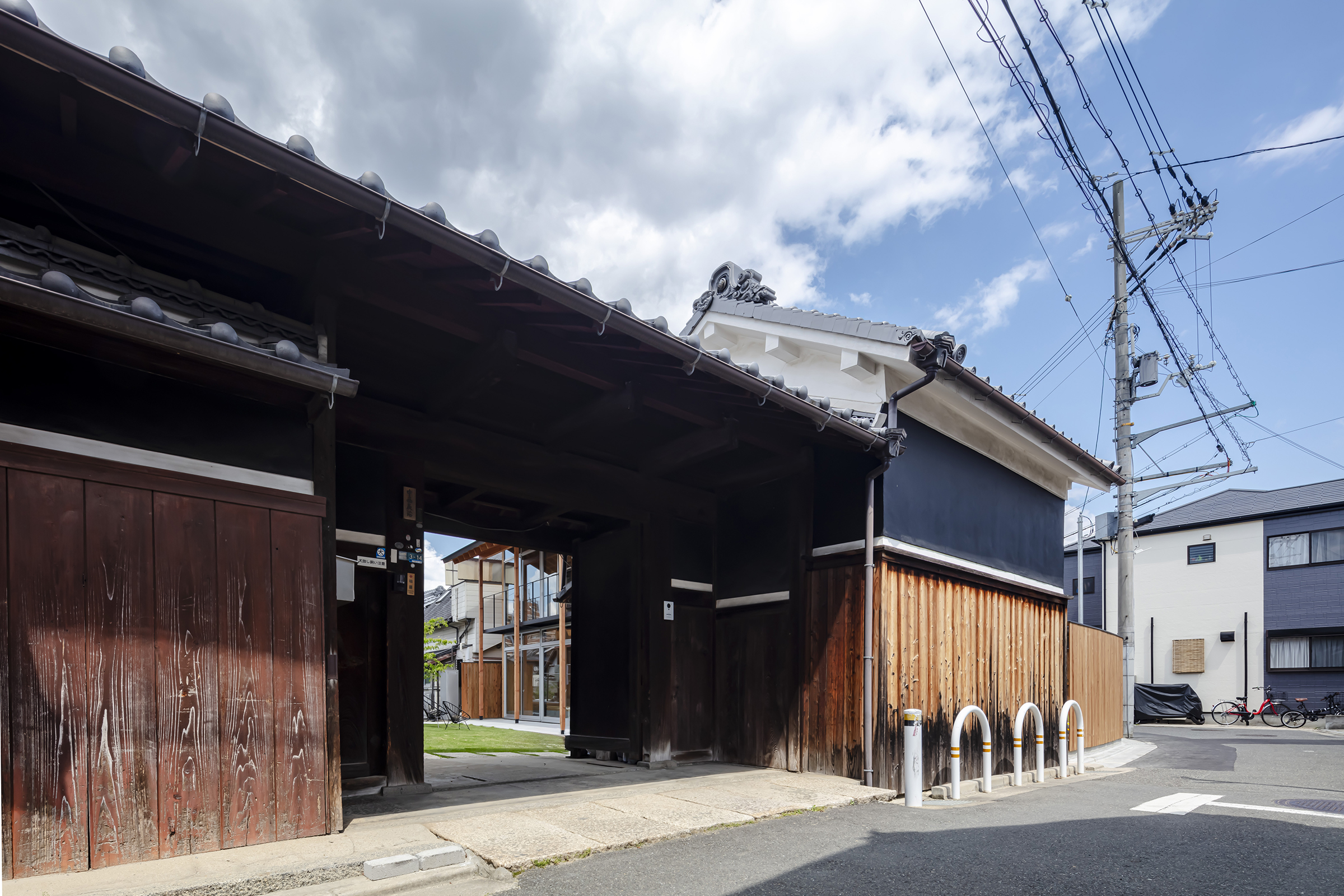
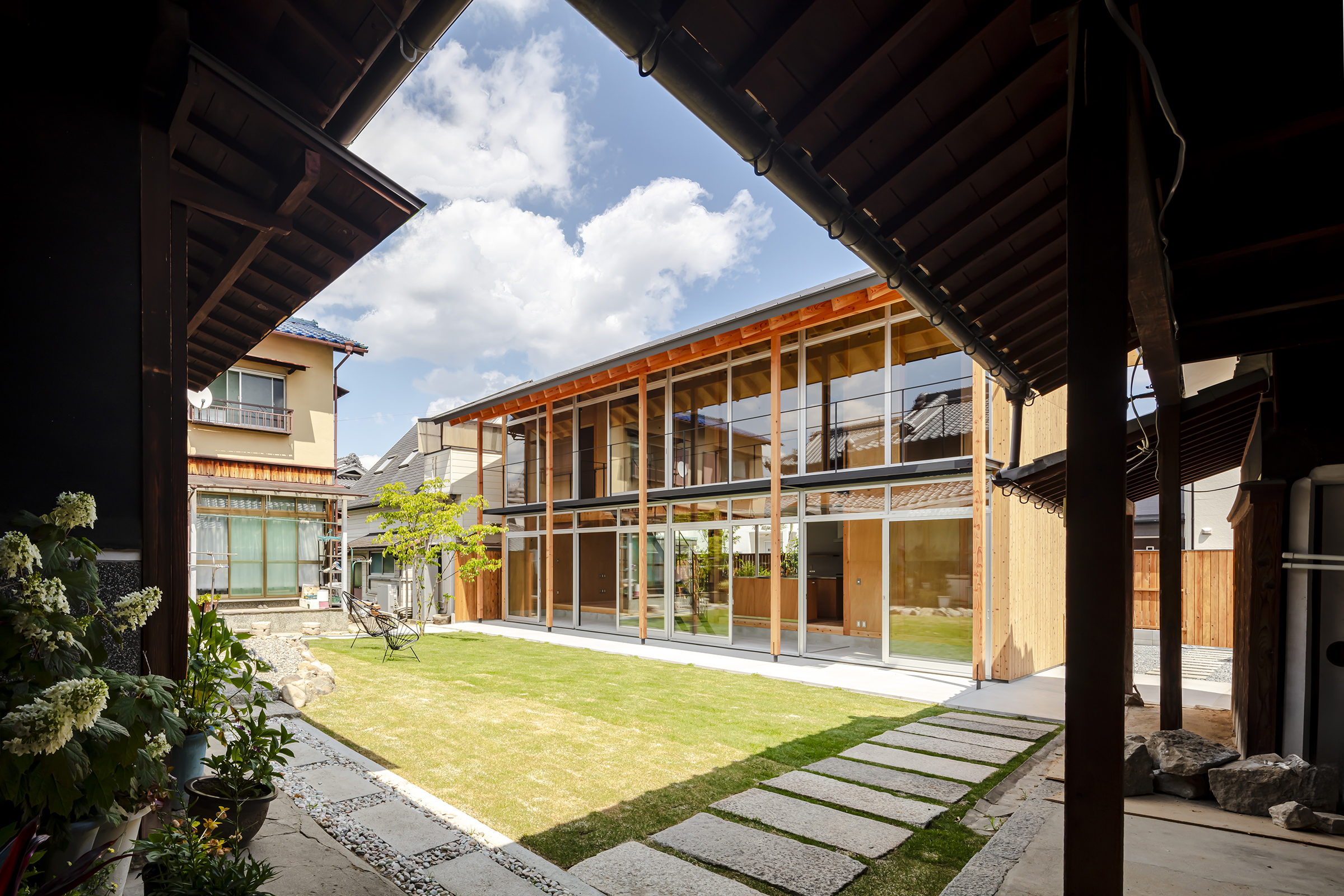
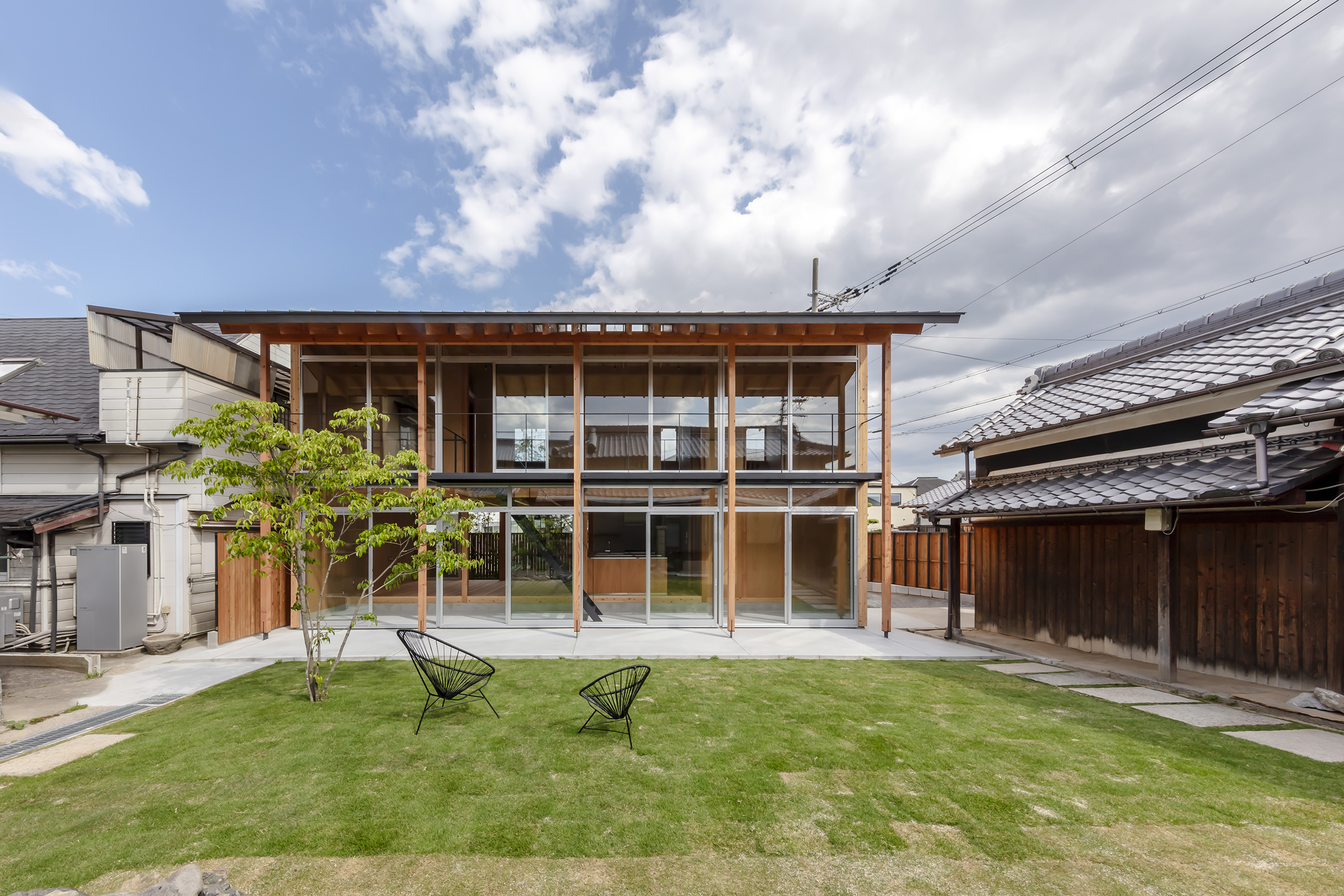
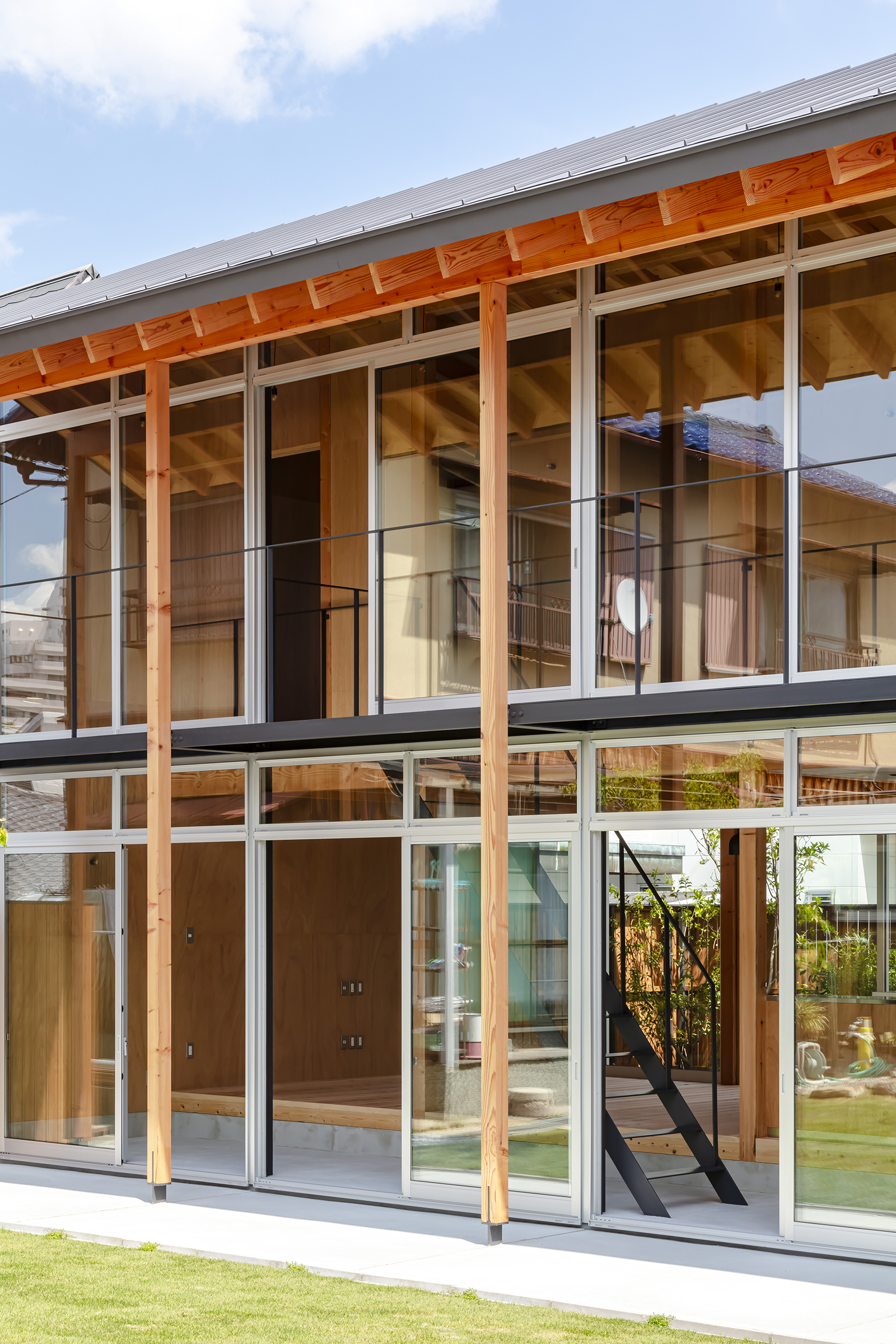
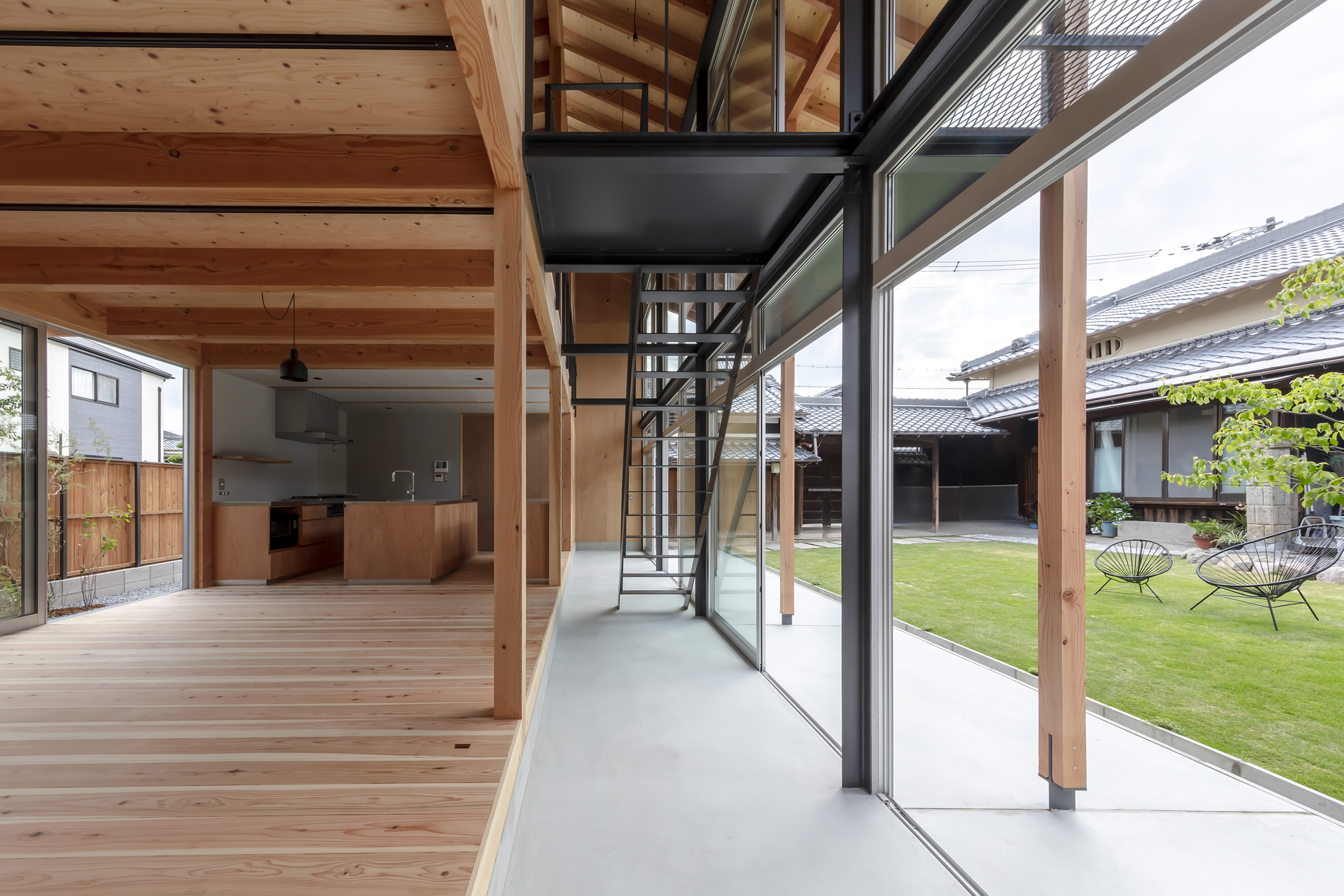
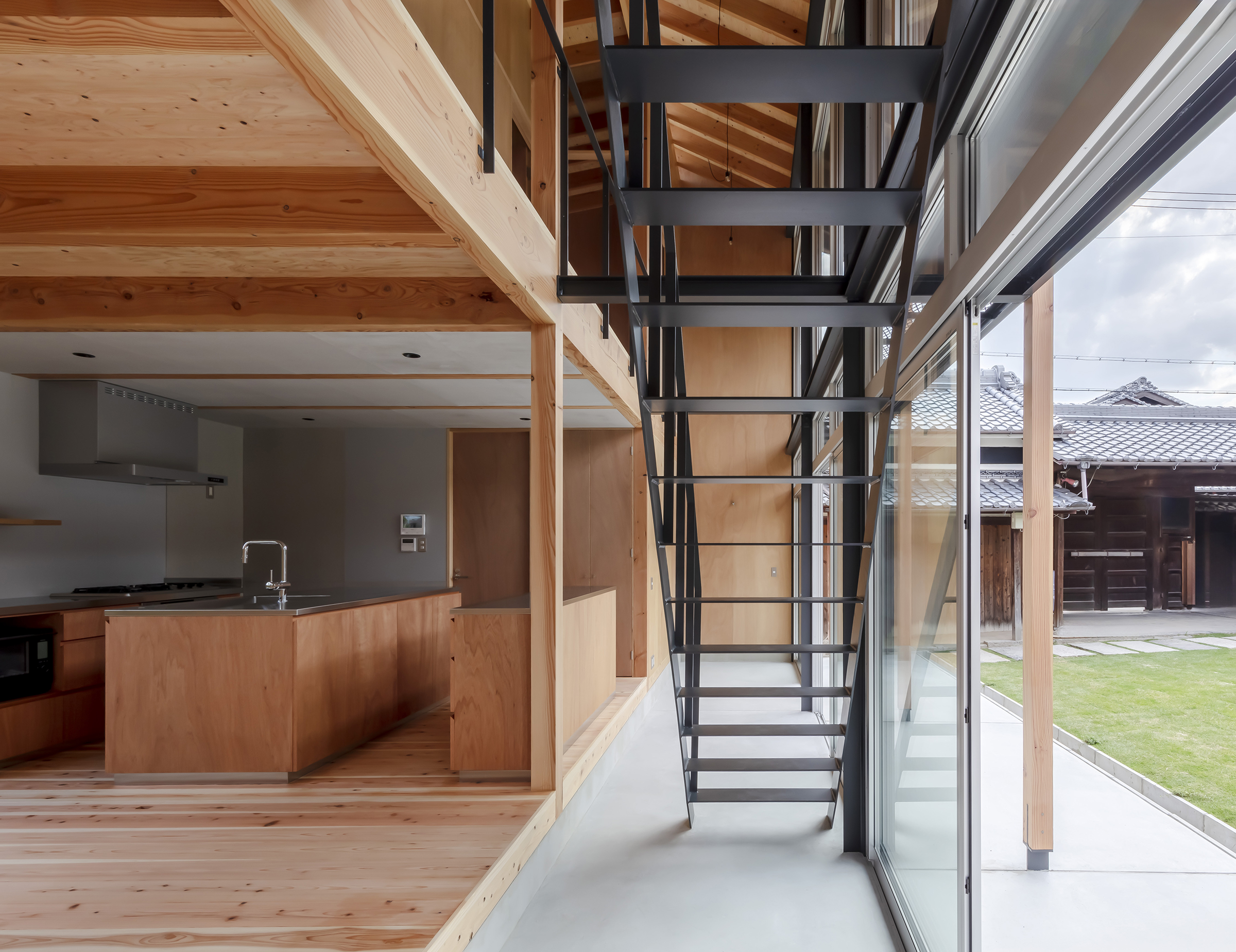
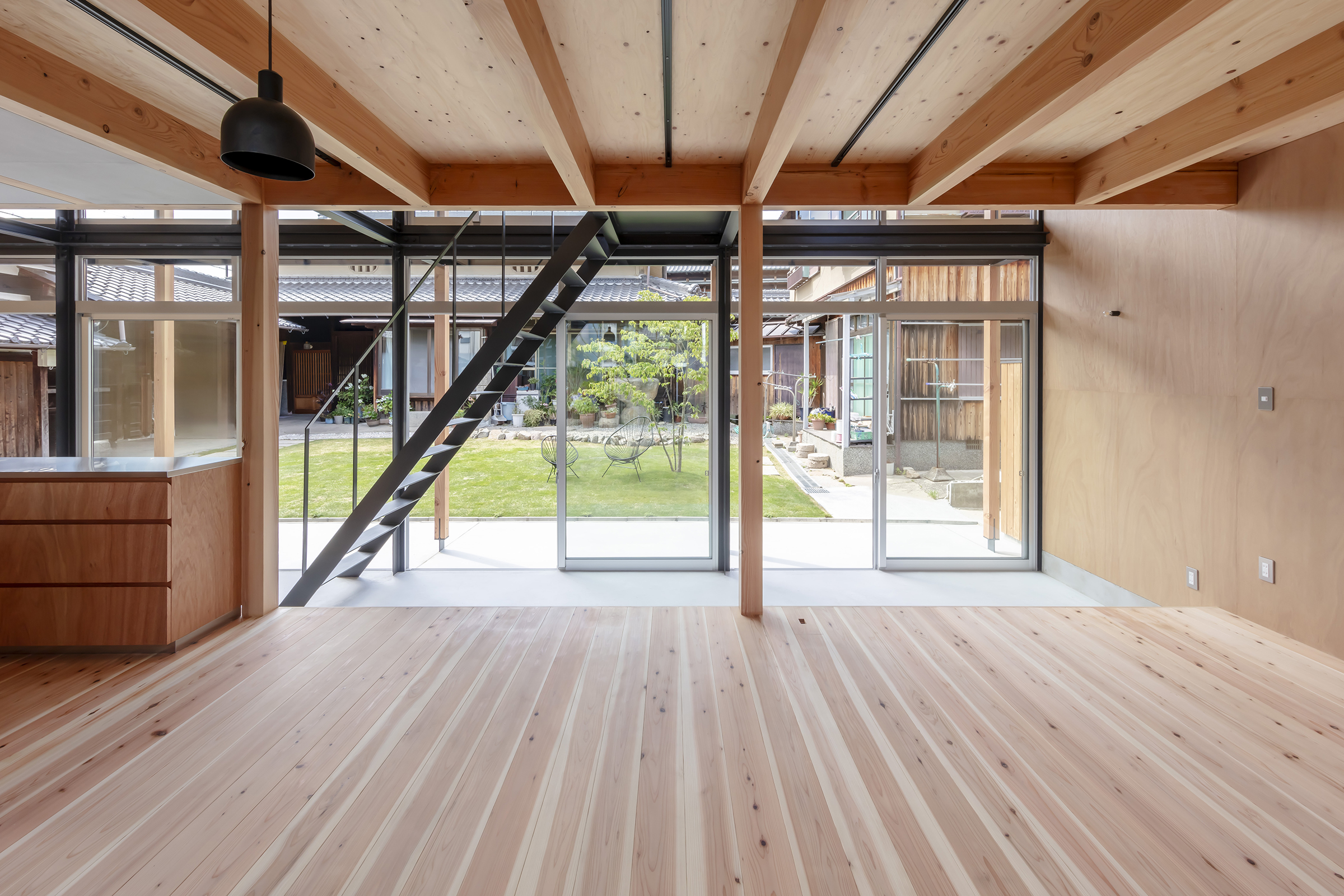
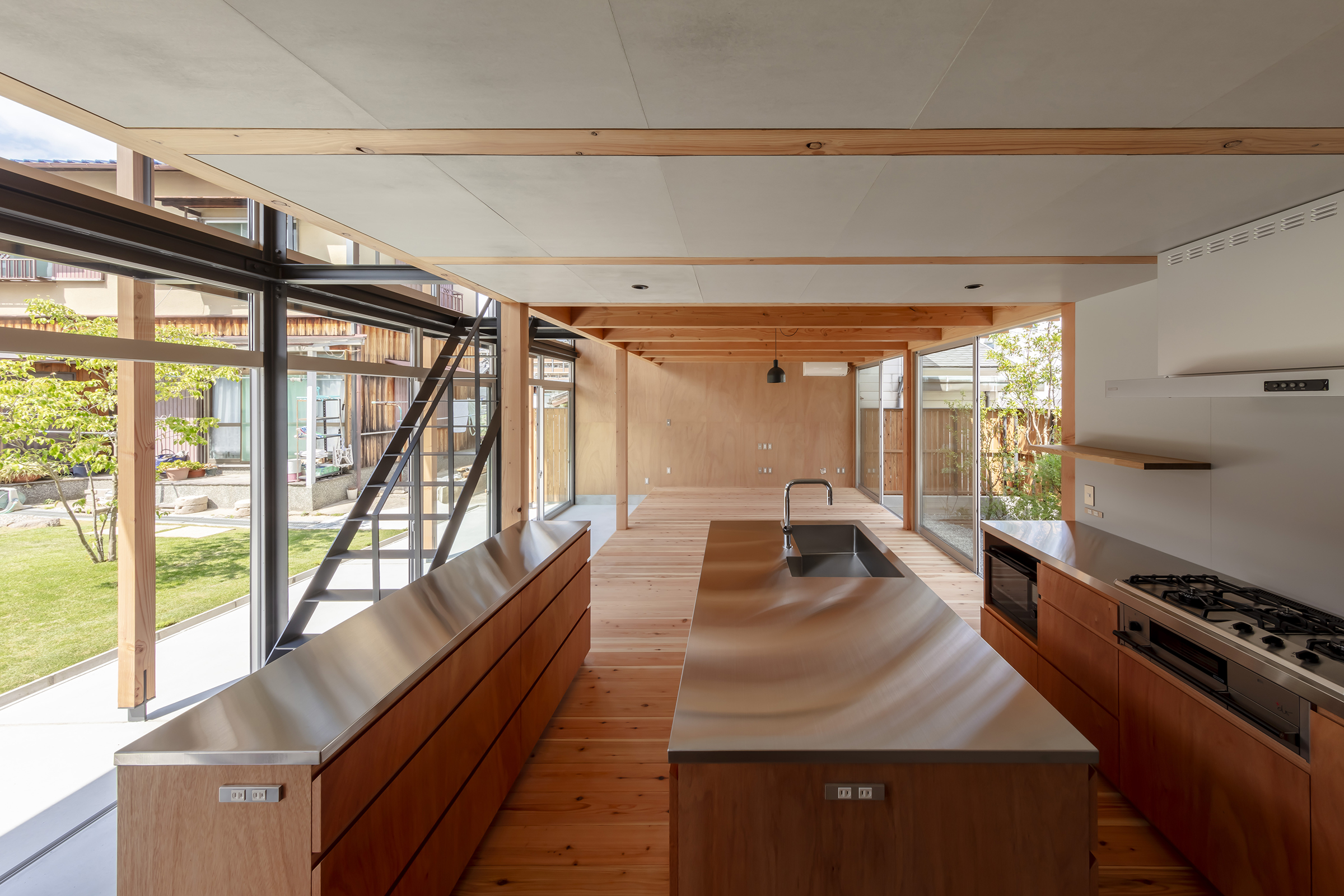
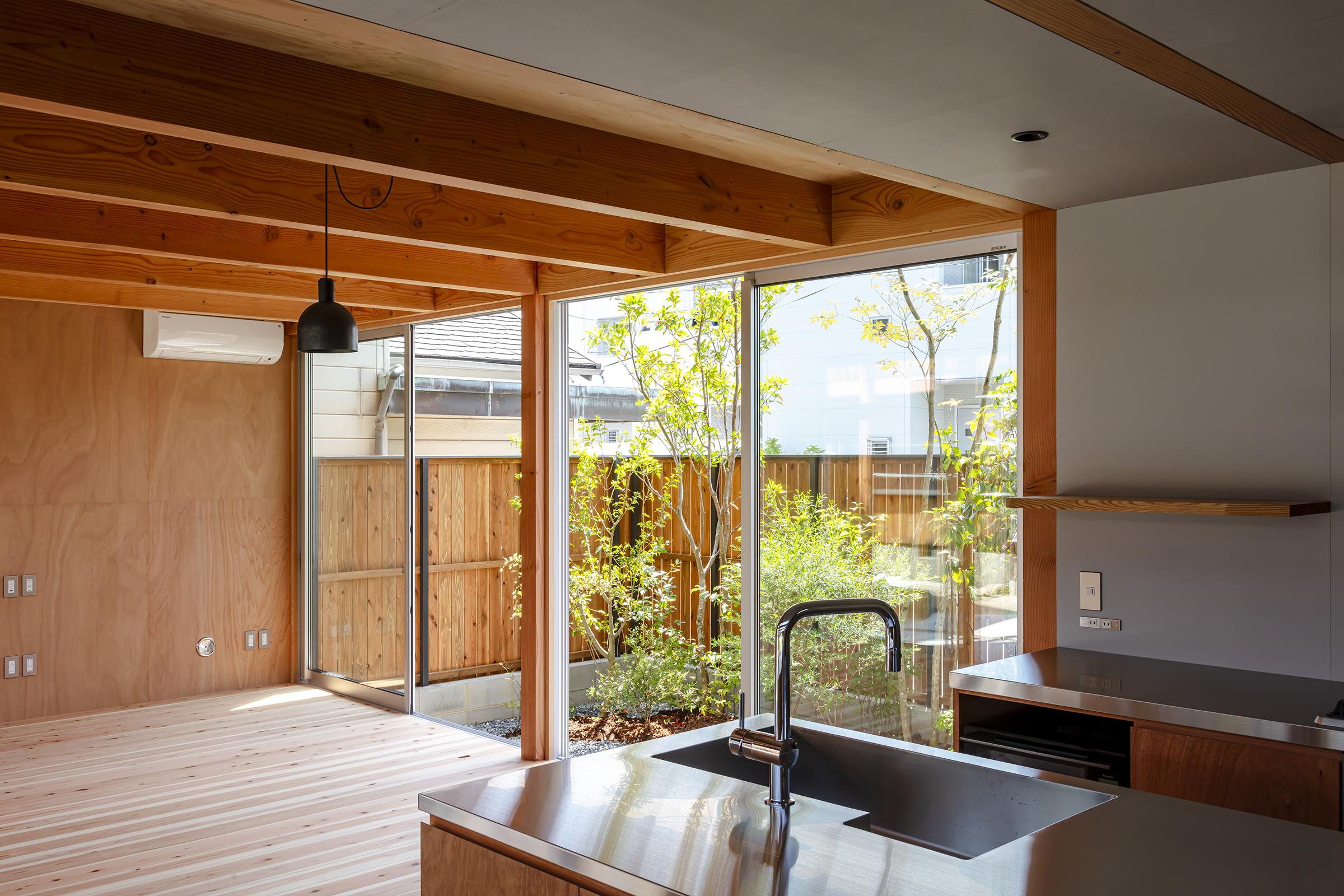
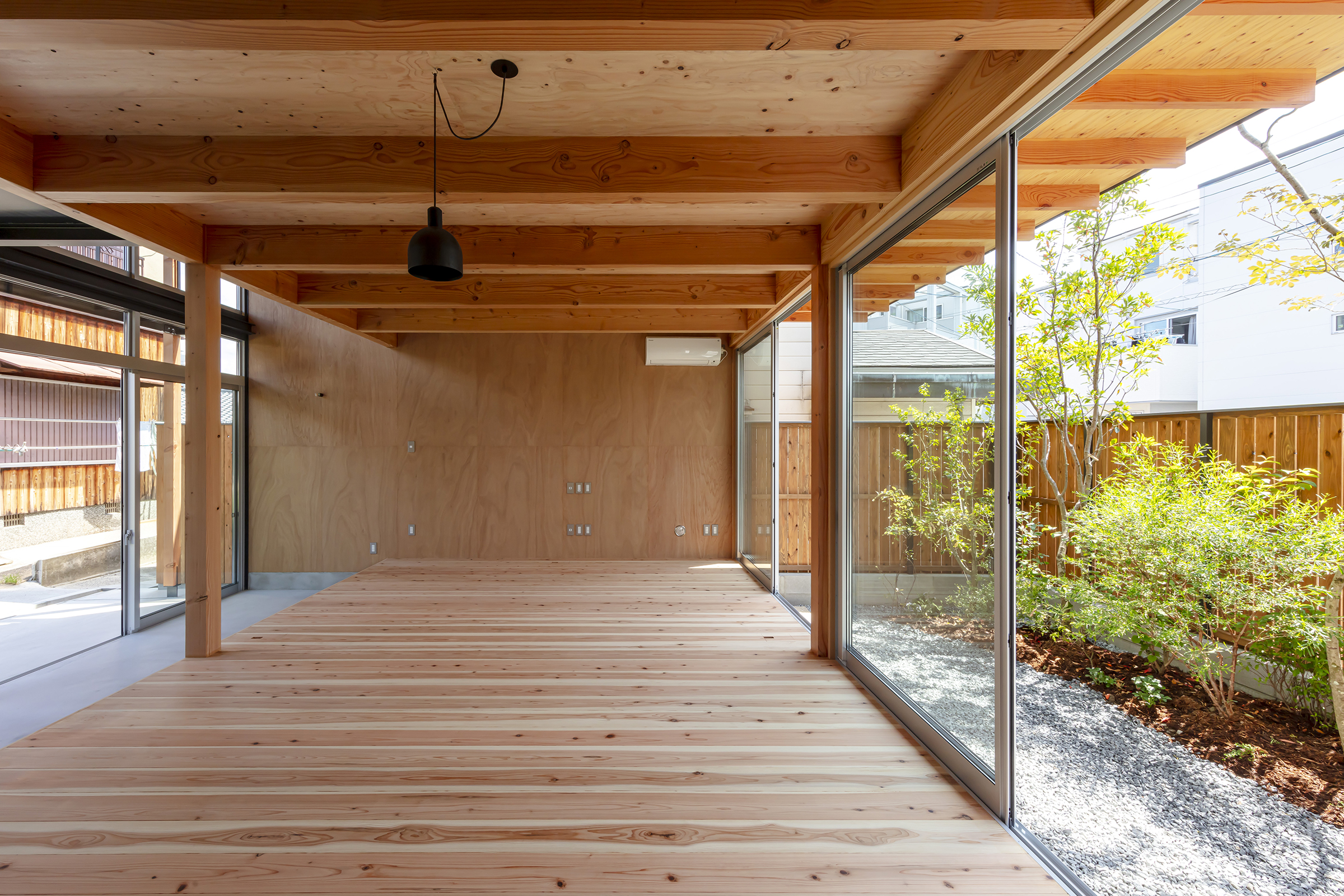
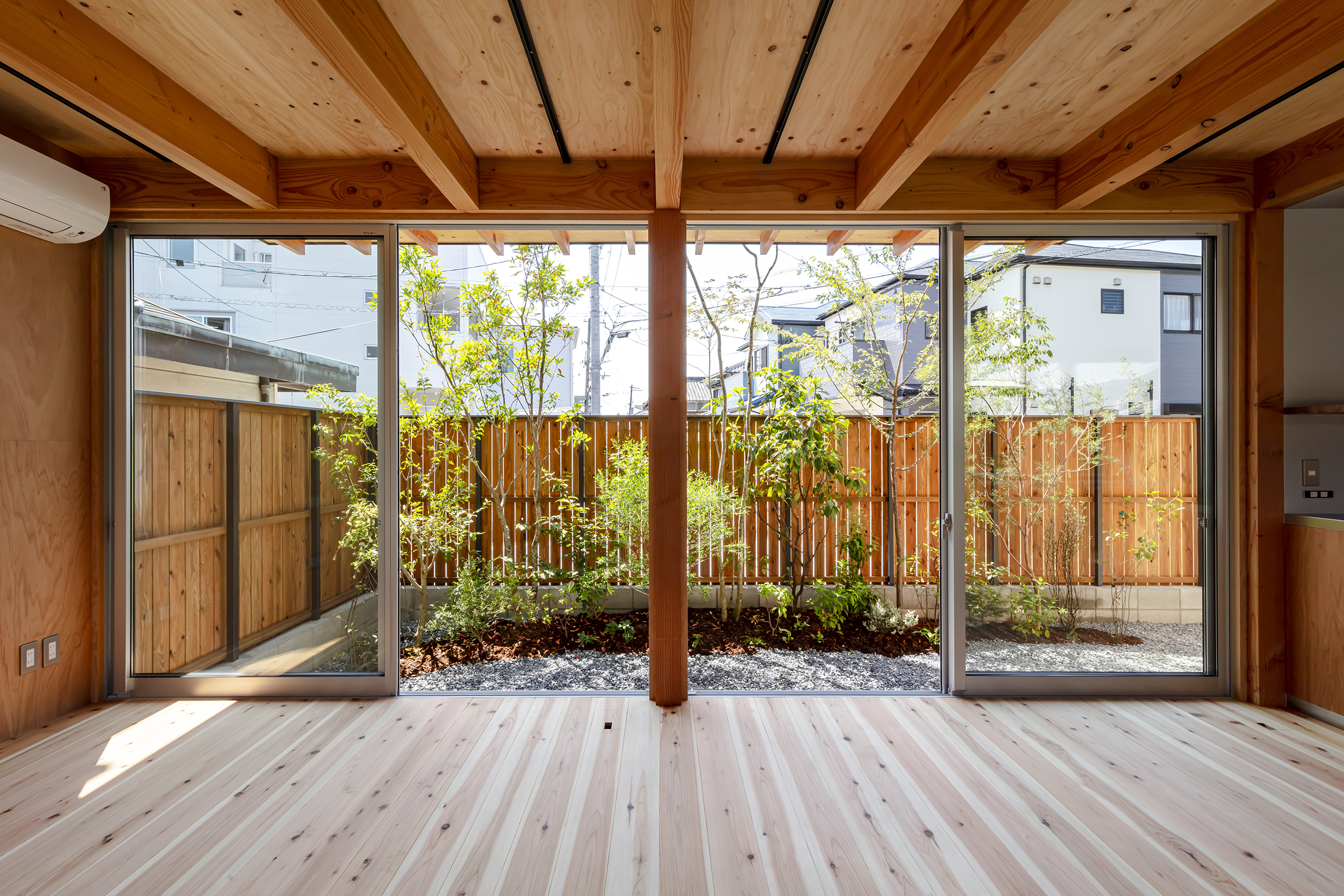
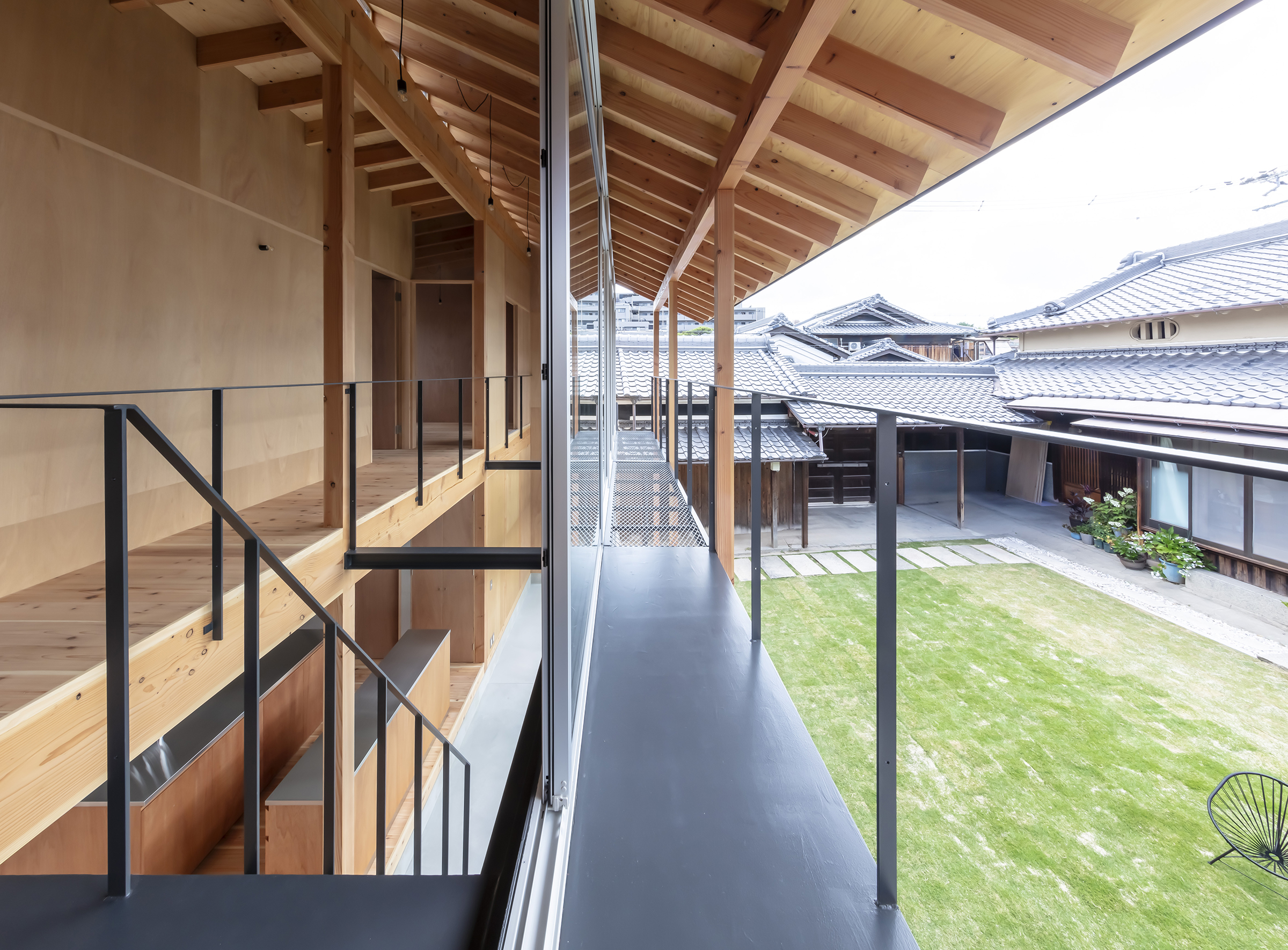
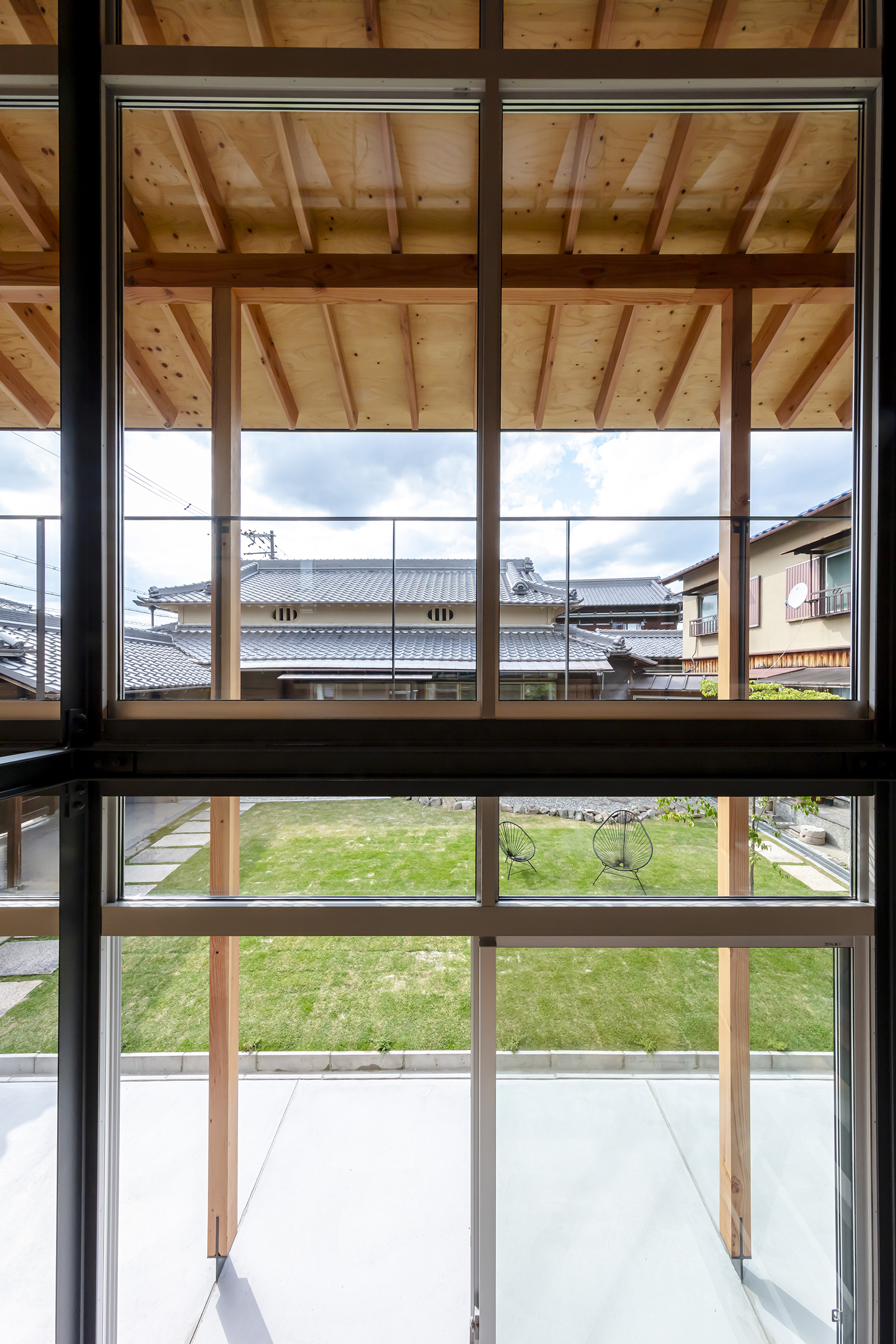
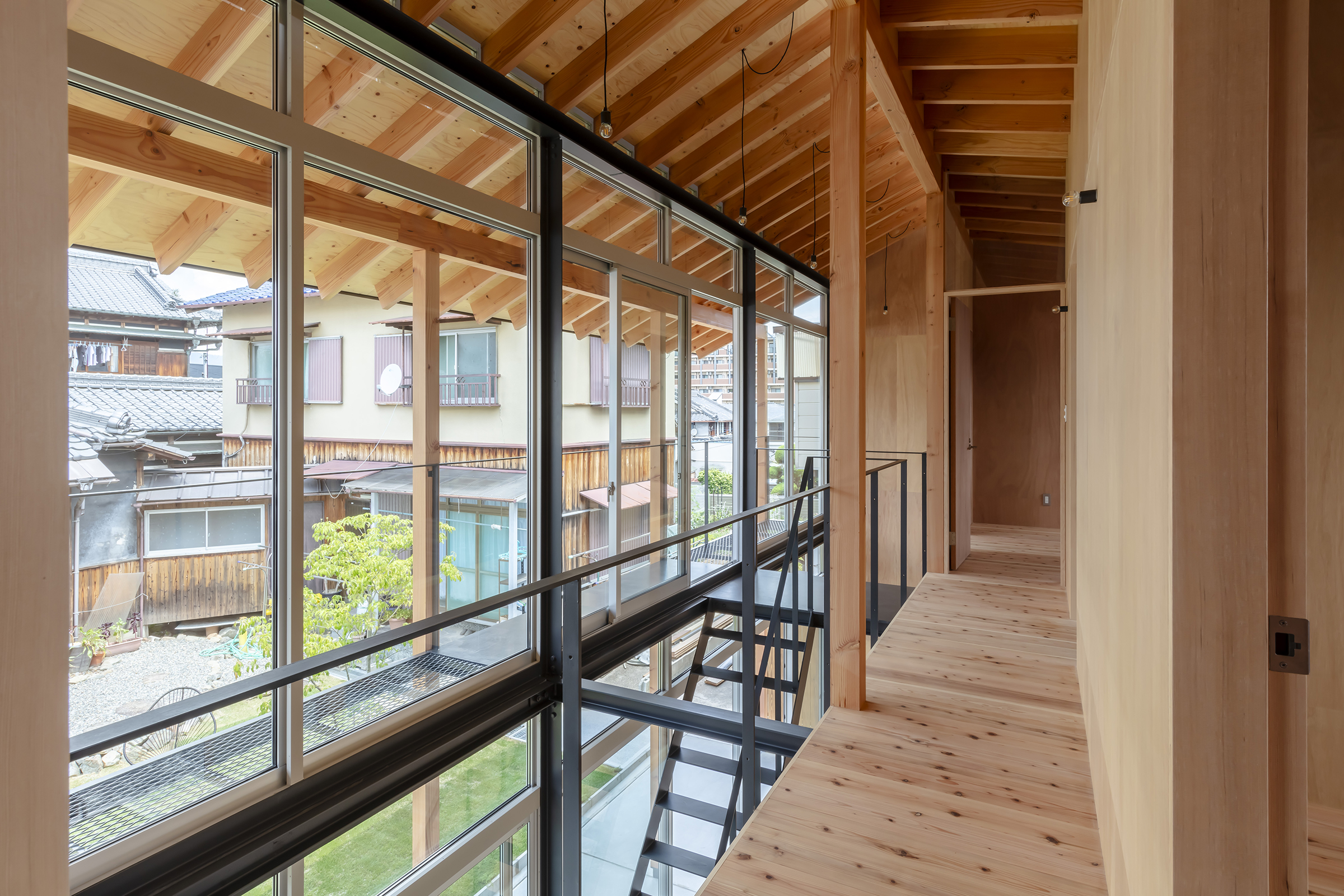
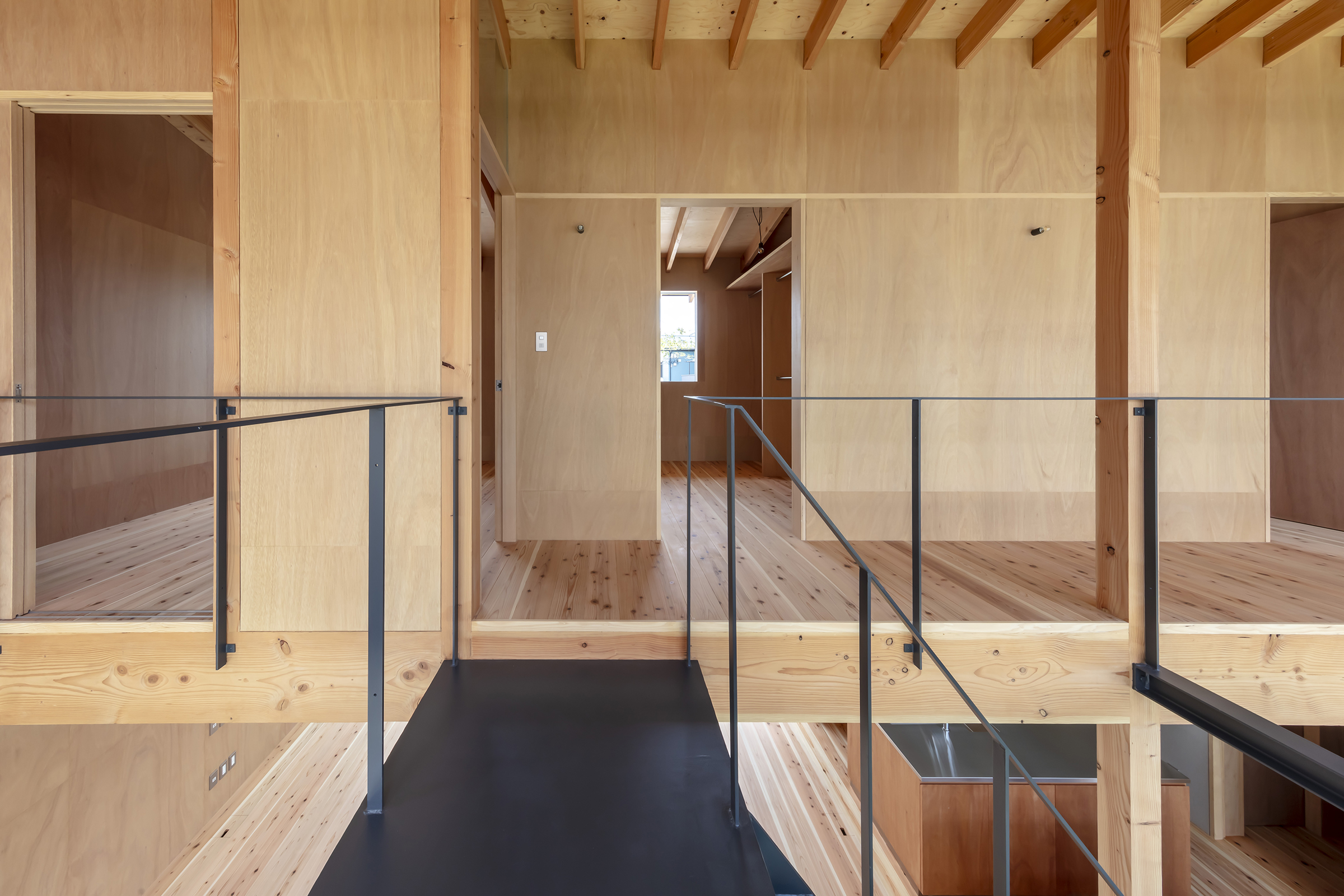
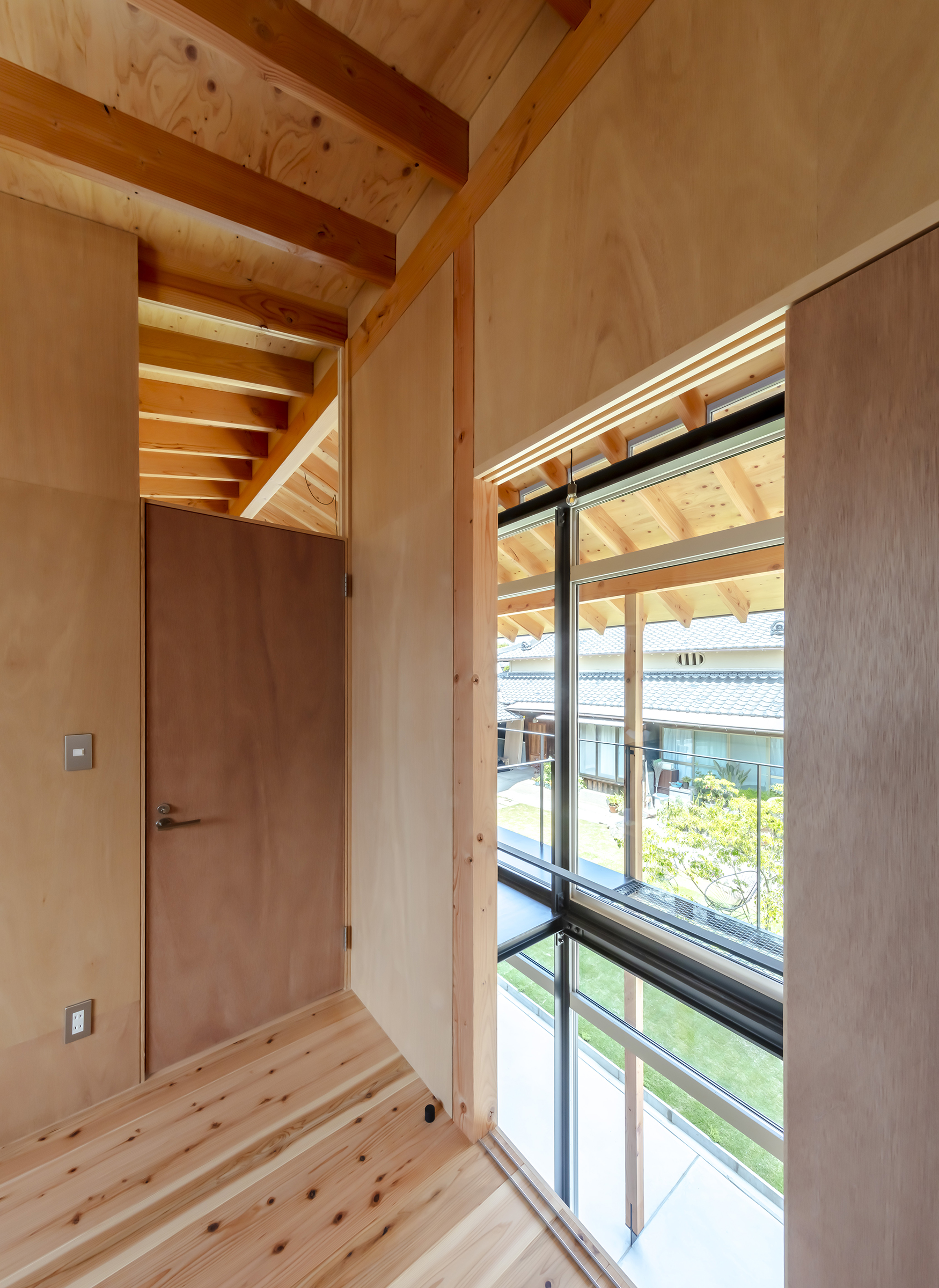
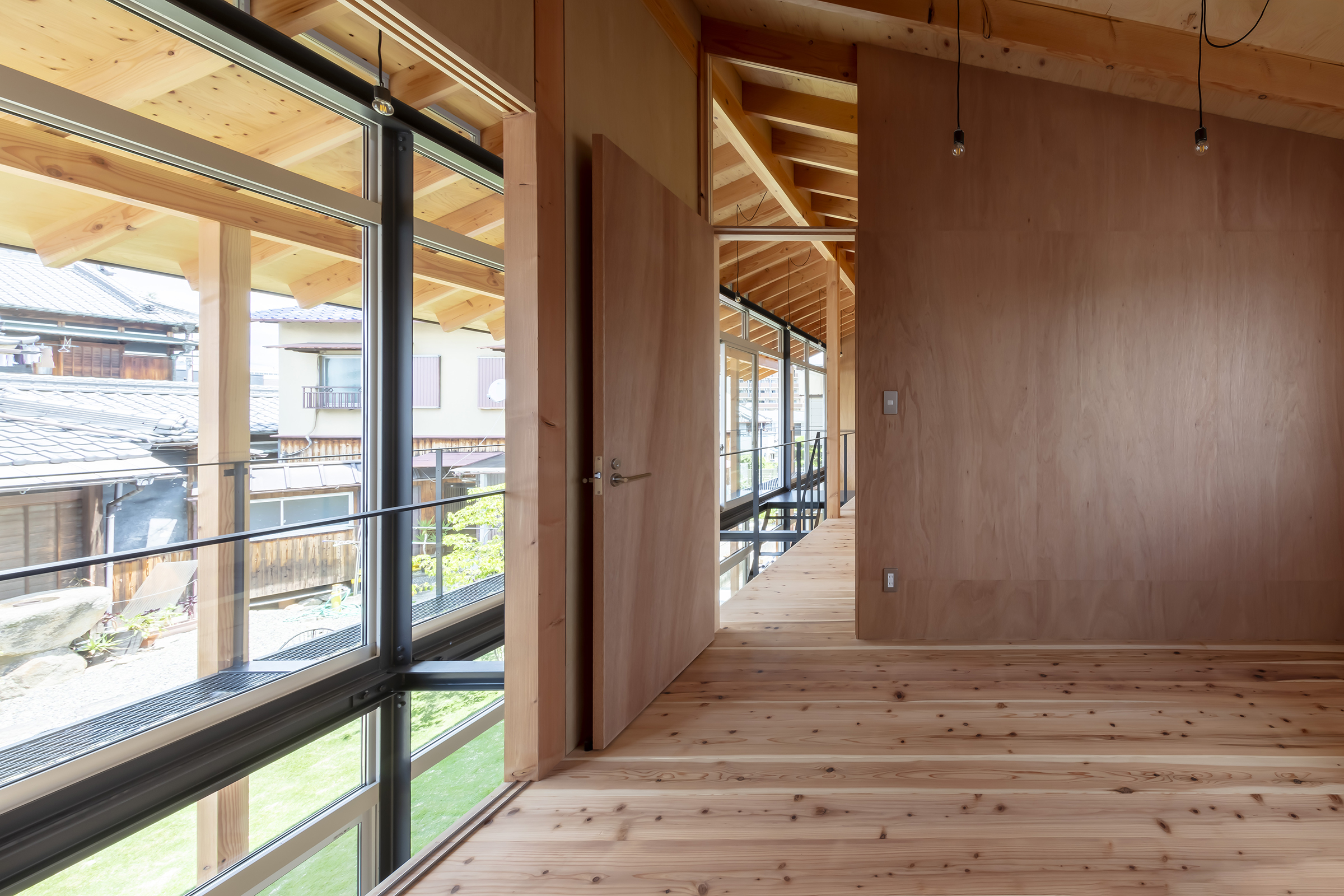
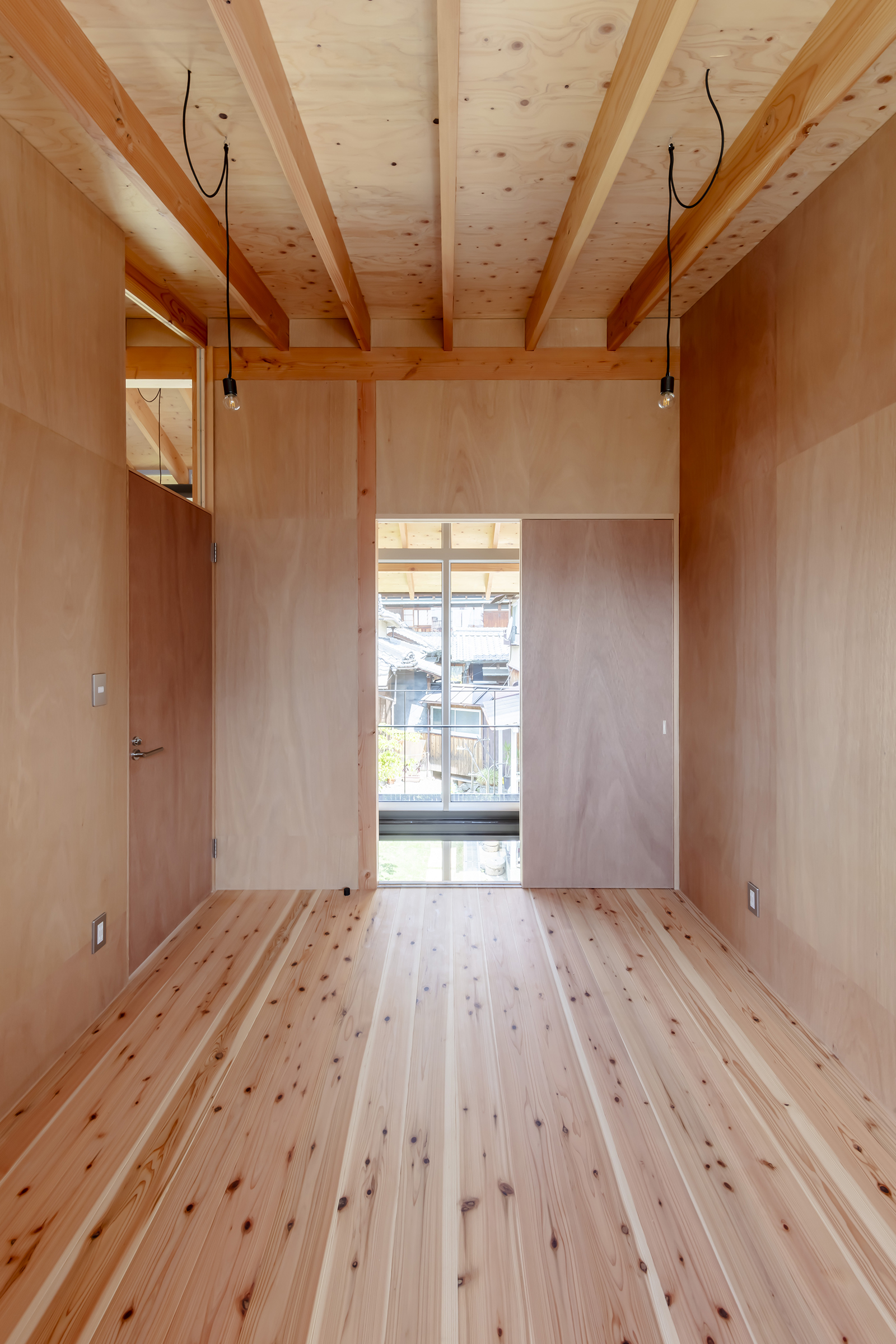
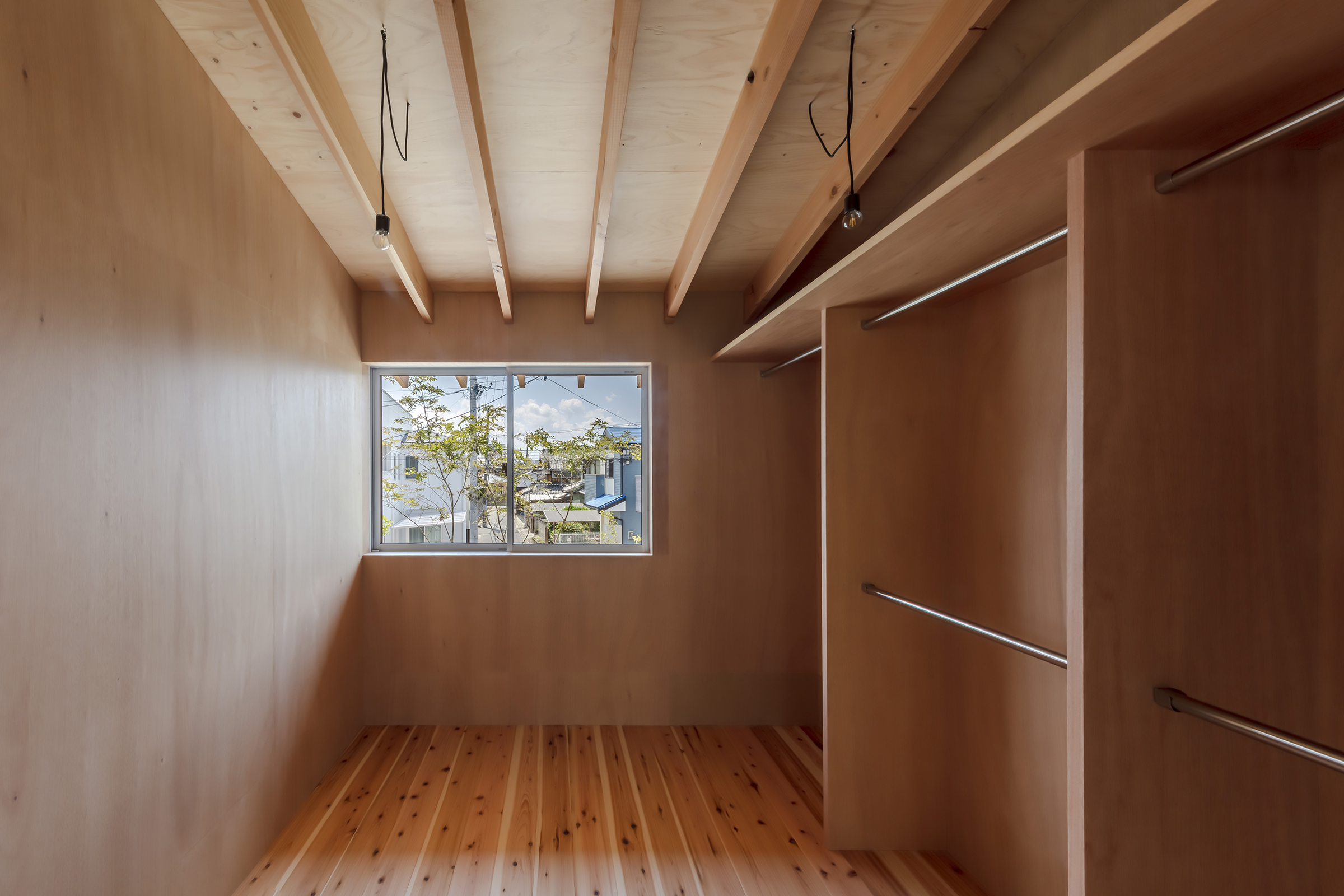
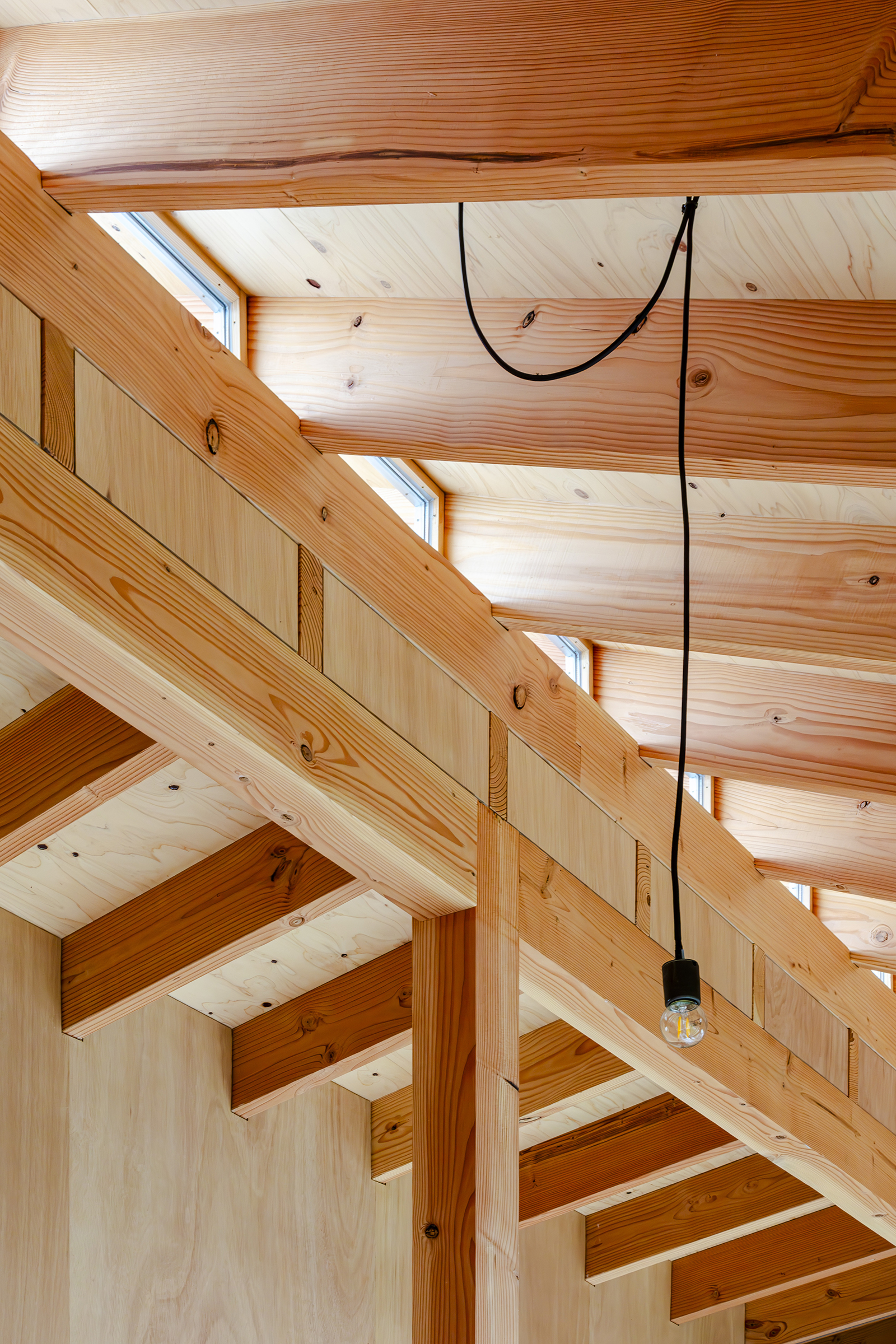
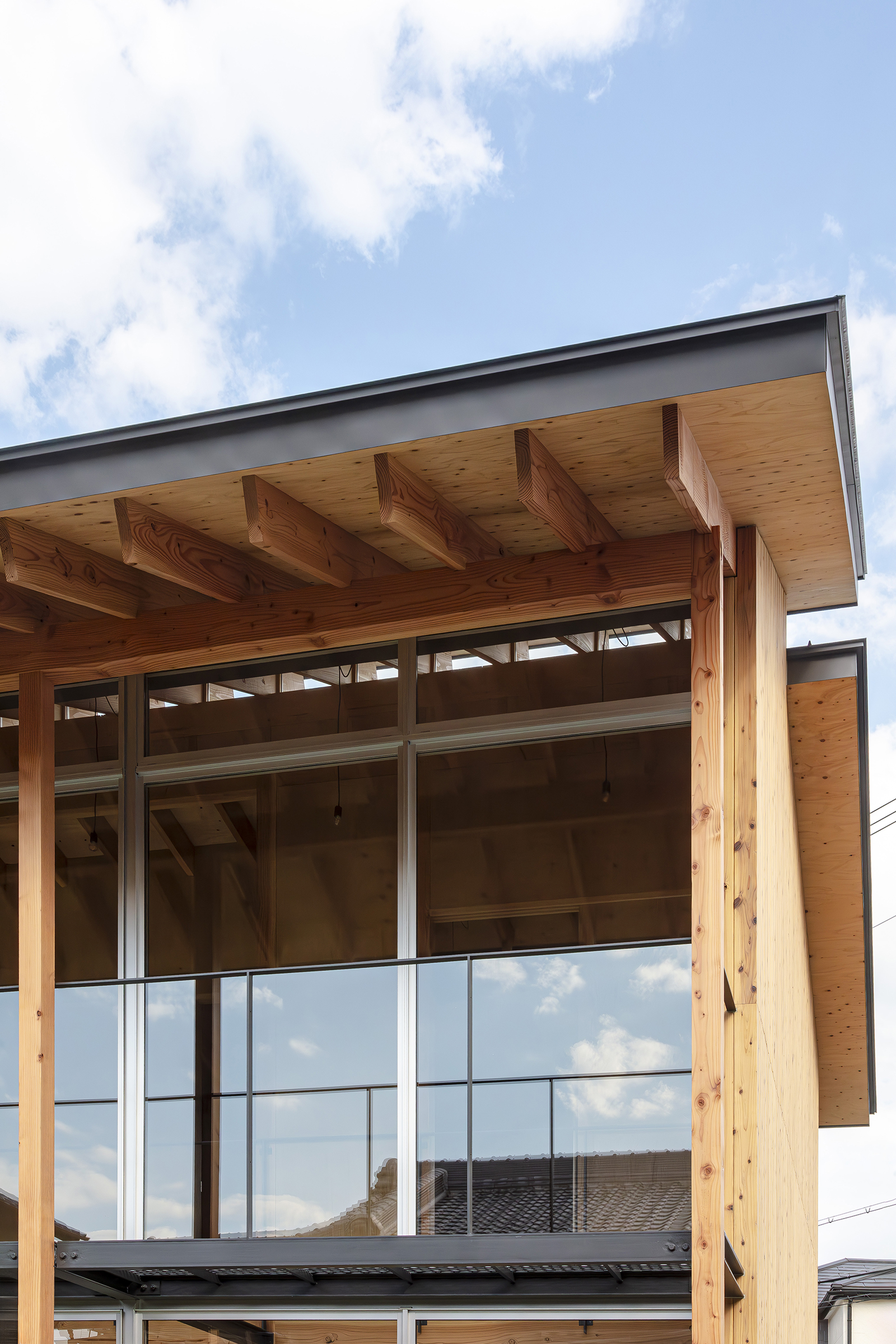
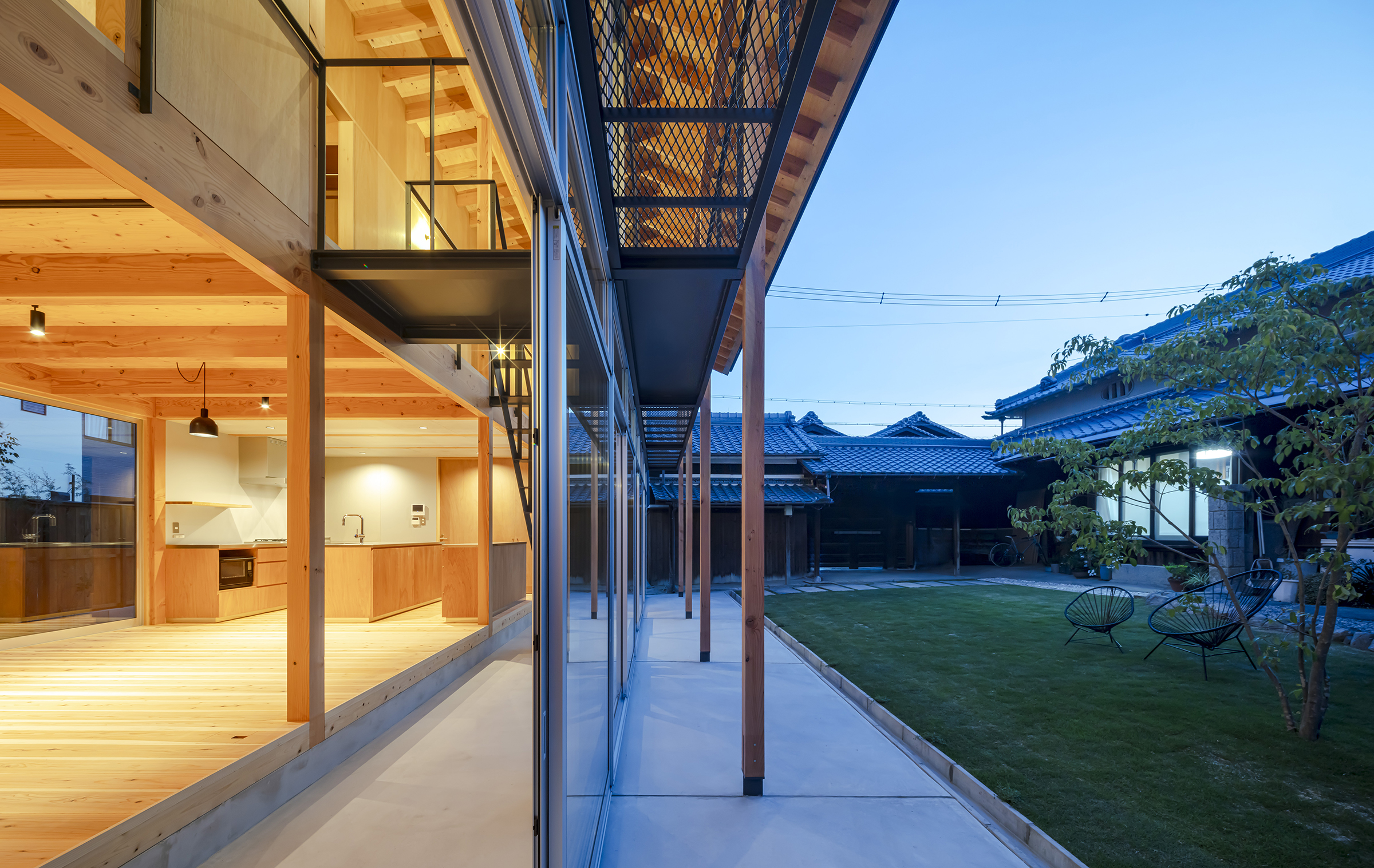
吹田市山田東の2世帯の住宅。山田村として栄えた山田川周辺の集落に位置するこの敷地には、100年近く存在する母屋や蔵が現存する。親世帯がその母屋や蔵を残しながら住み続け、新築の住宅に子世帯が住む。それぞれの棟が中庭を囲むように配置することで、大家族が中庭を通じて一緒に過ごせる場所を計画した。新しい住宅には、既存の母屋に存在する縁側や土間に倣い、中庭側に吹抜け土間による広縁を配置し、庭と空間的に連続するように設計した。大徳寺孤篷庵忘筌のように、庭から部屋に至るまでの、屋根、バルコニー、柱、外壁、床などの境界の位置を段階的に重ねながらずらすことで、室内外間の中間的な領域にゆるやかな連続性が生まれている。
El proyecto consiste en una vivienda bifamiliar situada en Yamada Higashi, en la ciudad de Suita. El terreno se encuentra en un antiguo asentamiento que prosperó a lo largo del río Yamada, conocido anteriormente como pueblo de Yamada, donde aún se conservan una casa principal y un almacén con casi un siglo de antigüedad. La generación de los padres continúa habitando la casa principal y el almacén existentes, mientras que la nueva vivienda está destinada a la familia de los hijos. Al disponer los distintos volúmenes alrededor de un patio central, el diseño crea un espacio común donde toda la familia puede convivir y compartir momentos. La nueva vivienda incorpora, en el lado del patio, una galería con suelo de tierra y doble altura, inspirada en el engawa (corredor) y el doma (suelo de tierra) de la casa principal existente, generando una continuidad espacial con el jardín. Siguiendo el ejemplo del Daitokuji Kohōan Bōsen, los límites entre elementos como el techo, el balcón, las columnas, los muros exteriores y el suelo se superponen y desplazan gradualmente, creando una transición suave y una conexión intermedia entre el interior y el exterior.
This project is a two-family residence located in Yamada Higashi, Suita City. The site lies within a settlement that developed along the Yamada River, formerly known as Yamada Village, where a main house and a storehouse that have stood for nearly a century still remain. The parents continue to live in the existing main house and storehouse, while the newly built residence accommodates the younger generation. By arranging each building around a central courtyard, the design creates a shared space where the extended family can gather and spend time together. The new house incorporates a double-height earthen-floor veranda facing the courtyard, inspired by the engawa and doma spaces of the existing main house, creating a spatial continuity with the garden. In reference to the spatial composition of Daitokuji Kohōan Bōsen, the boundaries—such as the roof, balcony, columns, exterior walls, and floors—are carefully layered and slightly offset from one another. This gradual transition generates a soft continuity and an intermediate zone between the interior and exterior spaces.

所在地: 大阪、日本
用途: 住宅
設計監理: 川上聡建築設計事務所/SATOSHI KAWAKAMI ARCHITECTS
構造設計: 柳室純構造設計
施工: 株式会社コムウト
写真: 高橋菜生
UBICACION: OSAKA, JAPON
USO: RESIDENCIA
ARQUITECTURA: SATOSHI KAWAKAMI ARCHITECTS
INGENIERO ESTRUCTURAL: JUN YANAGIMURO STRUCTUAL DESIGN
CONSTRUCCION: KOMUUTO
FOTOGRAFIA: NAO TAKAHASHI
LOCATION: OSAKA, JAPAN
BUILDING USE: RESIDENCE
ARCHITECTURE: SATOSHI KAWAKAMI ARCHITECTS
STRUCTURAL ENGINEER: JUN YANAGIMURO STRUCTUAL DESIGN
CONSTRUCTION: KOMUUTO
PHOTOGRAPHY: NAO TAKAHASHI